

Dec 19, 2025
5 Best Cloud Data Modeling Tools in 2026
5 Best Cloud Data Modeling Tools in 2026
5 Best Cloud Data Modeling Tools in 2026
Discover the top 5 cloud data modeling tools in 2026. Design, visualise, and refine database schemas faster with modern collaboration and automation.
Discover the top 5 cloud data modeling tools in 2026. Design, visualise, and refine database schemas faster with modern collaboration and automation.
Discover the top 5 cloud data modeling tools in 2026. Design, visualise, and refine database schemas faster with modern collaboration and automation.

Jonathan Fishner
8 minutes read
TLDR;
TLDR;
• What this covers: Five cloud-based data modeling tools tested for real-world schema design, collaboration, and browser-based workflows.
• Why cloud matters: Shareable links, real-time collaboration, and a single source of truth that stays current as schemas change.
• Tools reviewed: ChartDB, Lucidchart, dbdiagram, Vertabelo, and SqlDBM, each with different strengths for different team sizes and use cases.
• How to choose: Pick based on whether you need AI features, live database import, team collaboration, or deep enterprise modeling.
• What this covers: Five cloud-based data modeling tools tested for real-world schema design, collaboration, and browser-based workflows.
• Why cloud matters: Shareable links, real-time collaboration, and a single source of truth that stays current as schemas change.
• Tools reviewed: ChartDB, Lucidchart, dbdiagram, Vertabelo, and SqlDBM, each with different strengths for different team sizes and use cases.
• How to choose: Pick based on whether you need AI features, live database import, team collaboration, or deep enterprise modeling.
Introduction
A few years ago, “data modeling tool” meant one person on the team had a desktop app, a license key, and a file nobody else could open without asking nicely.
Now most teams are shipping on cloud databases, warehouses, and managed services, and the modeling workflow has to keep up. Not because it’s trendy, but because it’s the only way a diagram stays useful when schemas change weekly, people rotate teams, and reviews happen async.
I’m Jonathan, founder of ChartDB. I’ve spent years living in ERDs and schemas as an engineer, and now I build schema tooling full time. I also try a lot of tools in this space because I’m a nerd about what actually makes modeling feel fast, clear, and friendly for a team.
So here are five cloud data modeling tools I’d actually recommend looking at in 2026, plus what each one is best at. No hype, just what it feels like to use them.
What Are Cloud Data Modeling Tools?
Cloud data modeling tools are web based platforms that help you design, visualise, and document database schemas in a browser. The big difference versus traditional desktop modelers is not “it runs online.” It’s what that enables.
A cloud tool usually means you can share a link, collaborate with teammates, and keep a single source of truth. It also means onboarding is easier, and you can bring diagrams into daily workflows like PR reviews, incident debugging, or architecture planning.
Non cloud tools can still be powerful, especially for deep enterprise modeling, but they often create friction: installs, file versions, and diagrams that slowly drift away from reality.
If your data stack is cloud first, your modeling tool being cloud first tends to be the difference between “this diagram is helpful” and “this is a screenshot from six months ago.”
Top 5 Cloud Data Modeling Tools in 2026
Note: For each tool below, I’m focusing on cloud capabilities: collaboration, sharing, speed of getting a usable diagram, and how well it fits modern workflows. After this post, we can add a comparison table.
1) ChartDB
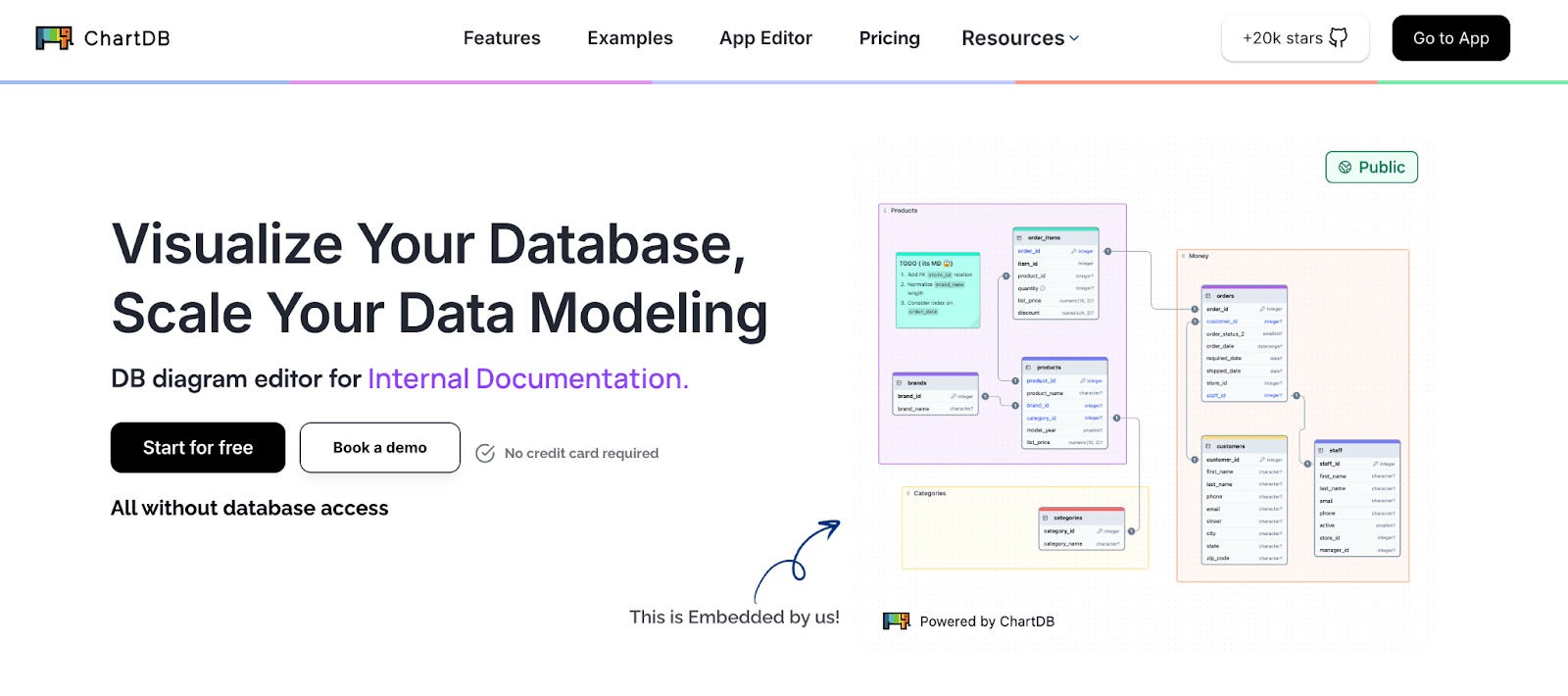
ChartDB is a modern database visualization and ERD tool built for engineers and data teams. You can import a schema quickly, explore relationships, organize the diagram visually, and use an AI agent to speed up repetitive modeling work.
Cloud capabilities
Cloud first collaboration and sharing, so diagrams don’t get stuck on one person’s laptop.
Fast schema import, so you can visualize real databases without weeks of setup.
AI agent workflows that help generate, refine, and clean up schemas.
Diagram organization that scales: colors by domain, Areas for grouping, zooming and filtering.
Optional self hosted open source core if you need more control later.
Pricing
Free plan available. Paid plans unlock more collaboration and AI usage. Check chartdb.io/pricing for current tiers.
2) SqlDBM
SqlDBM is a cloud based data modeling workspace that’s popular with teams building serious warehouse and analytics architectures. It leans into structured modeling, forward engineering, and enterprise workflows.
Cloud capabilities
Built for cloud data platform modeling, not just simple ERD drawing.
Supports collaborative modeling and standardized workflows for teams.
Often used when the diagram is part of implementation, not only documentation.
Pricing
Typically positioned as a premium tool. Confirm current pricing and plan details on the official site because this changes and can depend on team needs.
3) DrawSQL
DrawSQL is a cloud first database diagram tool that focuses on a smooth visual experience and team collaboration. It’s the kind of tool you can open and start using immediately.
Cloud capabilities
Real time collaboration on team tiers.
Easy sharing for reviews and onboarding.
A clean UI that makes diagrams feel presentable without much effort.
Pricing
Free tier available, paid tiers add private diagrams, more tables, and team features. Check drawsql.app for current plans.
4) dbdiagram
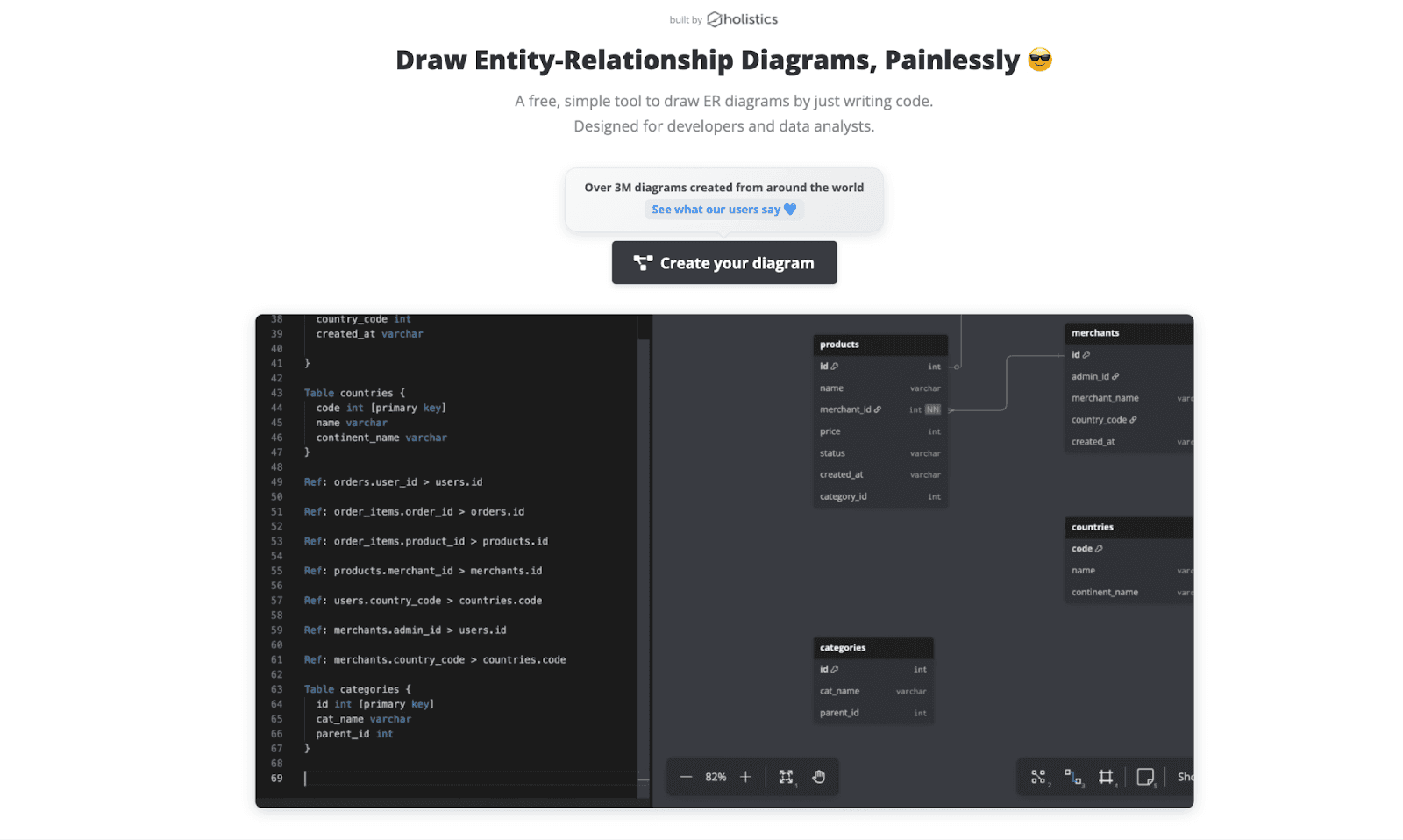
dbdiagram is the classic code first cloud ERD tool. You describe your schema in DBML or SQL, and it renders the diagram. It’s loved by developers who want modeling to feel close to code.
Cloud capabilities
DBML workflow works well with Git and text based reviews.
Easy to share diagrams via links.
Good for quick sketches and communicating schema ideas.
Pricing
Free plan with limits. Paid tiers add more private diagrams and collaboration. Check dbdiagram.io/pricing for current details.
5) Azimutt
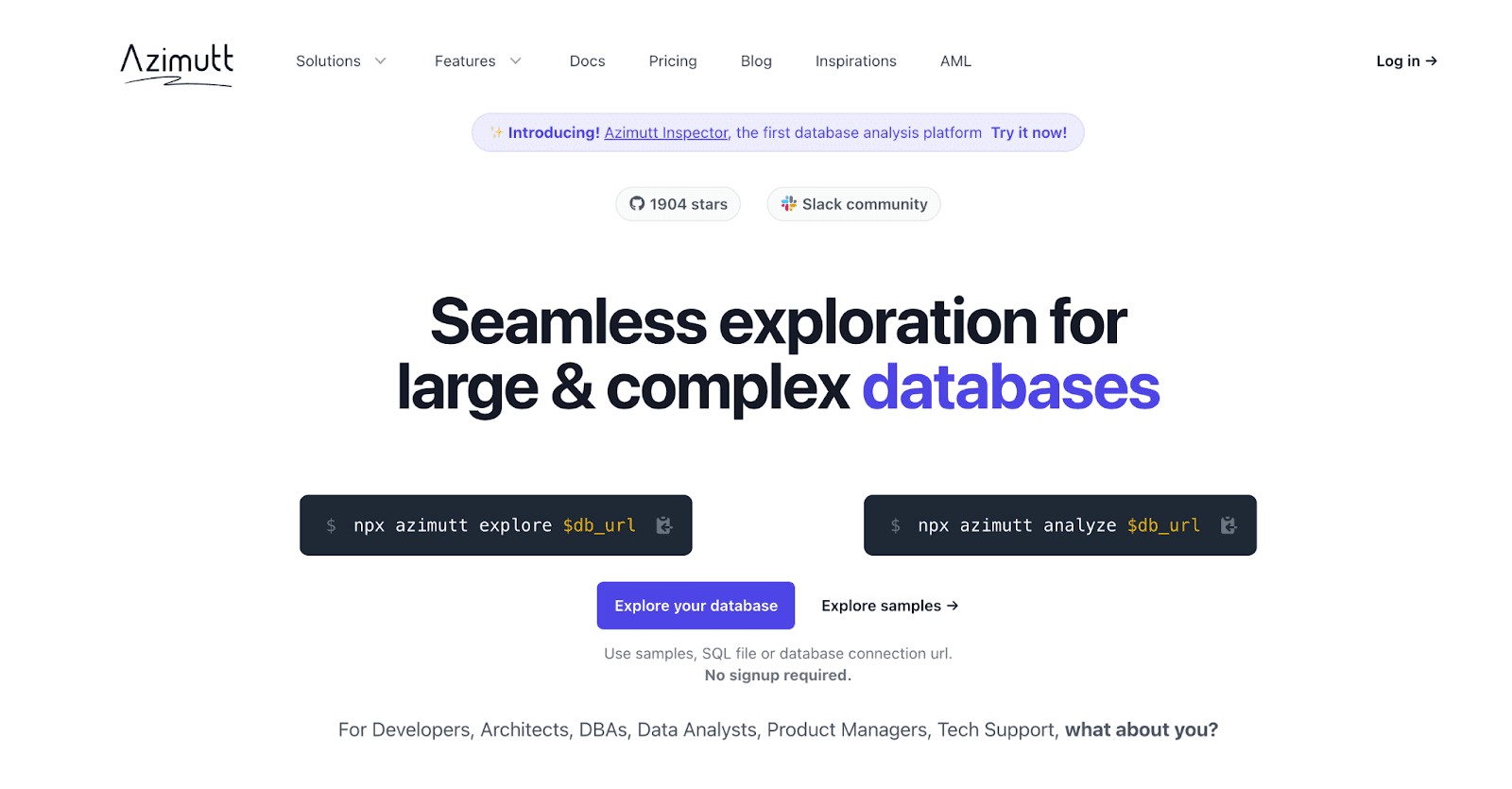
Azimutt is a database exploration and schema analysis tool that’s excellent when your schema is large and messy. It’s less about drawing from scratch and more about understanding what exists and spotting issues.
Cloud capabilities
Exploration features that help keep large schemas readable.
Tools to navigate relationships and understand complexity gradually.
Analysis that helps surface inconsistencies and design smells.
Pricing
Team and solo plans vary. Check vertabelo.com for current tiers.
Wrapping Up
Cloud data modeling tools matter in 2026 because modeling is not a one person job anymore. The diagram has to be shareable, current, and usable during real work: reviews, migrations, debugging, and onboarding.
Different tools serve different needs.
If you want a code first diagrammer, dbdiagram is great. If you want something very visual and collaborative, DrawSQL is strong. If you want deeper analysis and exploration on complex schemas, Azimutt is worth a look. If you are doing heavier warehouse modeling workflows, SqlDBM often fits.
And if you want a modern tool built for live schema visualization with AI support to remove the grunt work, that’s exactly why we built ChartDB. Try it free if you want to see your schema as a living map instead of a screenshot.
Extra resources
Introduction
A few years ago, “data modeling tool” meant one person on the team had a desktop app, a license key, and a file nobody else could open without asking nicely.
Now most teams are shipping on cloud databases, warehouses, and managed services, and the modeling workflow has to keep up. Not because it’s trendy, but because it’s the only way a diagram stays useful when schemas change weekly, people rotate teams, and reviews happen async.
I’m Jonathan, founder of ChartDB. I’ve spent years living in ERDs and schemas as an engineer, and now I build schema tooling full time. I also try a lot of tools in this space because I’m a nerd about what actually makes modeling feel fast, clear, and friendly for a team.
So here are five cloud data modeling tools I’d actually recommend looking at in 2026, plus what each one is best at. No hype, just what it feels like to use them.
What Are Cloud Data Modeling Tools?
Cloud data modeling tools are web based platforms that help you design, visualise, and document database schemas in a browser. The big difference versus traditional desktop modelers is not “it runs online.” It’s what that enables.
A cloud tool usually means you can share a link, collaborate with teammates, and keep a single source of truth. It also means onboarding is easier, and you can bring diagrams into daily workflows like PR reviews, incident debugging, or architecture planning.
Non cloud tools can still be powerful, especially for deep enterprise modeling, but they often create friction: installs, file versions, and diagrams that slowly drift away from reality.
If your data stack is cloud first, your modeling tool being cloud first tends to be the difference between “this diagram is helpful” and “this is a screenshot from six months ago.”
Top 5 Cloud Data Modeling Tools in 2026
Note: For each tool below, I’m focusing on cloud capabilities: collaboration, sharing, speed of getting a usable diagram, and how well it fits modern workflows. After this post, we can add a comparison table.
1) ChartDB
ChartDB is a modern database visualization and ERD tool built for engineers and data teams. You can import a schema quickly, explore relationships, organize the diagram visually, and use an AI agent to speed up repetitive modeling work.
Cloud capabilities
Cloud first collaboration and sharing, so diagrams don’t get stuck on one person’s laptop.
Fast schema import, so you can visualize real databases without weeks of setup.
AI agent workflows that help generate, refine, and clean up schemas.
Diagram organization that scales: colors by domain, Areas for grouping, zooming and filtering.
Optional self hosted open source core if you need more control later.
Pricing
Free plan available. Paid plans unlock more collaboration and AI usage. Check chartdb.io/pricing for current tiers.
2) SqlDBM
SqlDBM is a cloud based data modeling workspace that’s popular with teams building serious warehouse and analytics architectures. It leans into structured modeling, forward engineering, and enterprise workflows.
Cloud capabilities
Built for cloud data platform modeling, not just simple ERD drawing.
Supports collaborative modeling and standardized workflows for teams.
Often used when the diagram is part of implementation, not only documentation.
Pricing
Typically positioned as a premium tool. Confirm current pricing and plan details on the official site because this changes and can depend on team needs.
3) DrawSQL
DrawSQL is a cloud first database diagram tool that focuses on a smooth visual experience and team collaboration. It’s the kind of tool you can open and start using immediately.
Cloud capabilities
Real time collaboration on team tiers.
Easy sharing for reviews and onboarding.
A clean UI that makes diagrams feel presentable without much effort.
Pricing
Free tier available, paid tiers add private diagrams, more tables, and team features. Check drawsql.app for current plans.
4) dbdiagram
dbdiagram is the classic code first cloud ERD tool. You describe your schema in DBML or SQL, and it renders the diagram. It’s loved by developers who want modeling to feel close to code.
Cloud capabilities
DBML workflow works well with Git and text based reviews.
Easy to share diagrams via links.
Good for quick sketches and communicating schema ideas.
Pricing
Free plan with limits. Paid tiers add more private diagrams and collaboration. Check dbdiagram.io/pricing for current details.
5) Azimutt
Azimutt is a database exploration and schema analysis tool that’s excellent when your schema is large and messy. It’s less about drawing from scratch and more about understanding what exists and spotting issues.
Cloud capabilities
Exploration features that help keep large schemas readable.
Tools to navigate relationships and understand complexity gradually.
Analysis that helps surface inconsistencies and design smells.
Pricing
Team and solo plans vary. Check vertabelo.com for current tiers.
Wrapping Up
Cloud data modeling tools matter in 2026 because modeling is not a one person job anymore. The diagram has to be shareable, current, and usable during real work: reviews, migrations, debugging, and onboarding.
Different tools serve different needs.
If you want a code first diagrammer, dbdiagram is great. If you want something very visual and collaborative, DrawSQL is strong. If you want deeper analysis and exploration on complex schemas, Azimutt is worth a look. If you are doing heavier warehouse modeling workflows, SqlDBM often fits.
And if you want a modern tool built for live schema visualization with AI support to remove the grunt work, that’s exactly why we built ChartDB. Try it free if you want to see your schema as a living map instead of a screenshot.
Extra resources
Introduction
A few years ago, “data modeling tool” meant one person on the team had a desktop app, a license key, and a file nobody else could open without asking nicely.
Now most teams are shipping on cloud databases, warehouses, and managed services, and the modeling workflow has to keep up. Not because it’s trendy, but because it’s the only way a diagram stays useful when schemas change weekly, people rotate teams, and reviews happen async.
I’m Jonathan, founder of ChartDB. I’ve spent years living in ERDs and schemas as an engineer, and now I build schema tooling full time. I also try a lot of tools in this space because I’m a nerd about what actually makes modeling feel fast, clear, and friendly for a team.
So here are five cloud data modeling tools I’d actually recommend looking at in 2026, plus what each one is best at. No hype, just what it feels like to use them.
What Are Cloud Data Modeling Tools?
Cloud data modeling tools are web based platforms that help you design, visualise, and document database schemas in a browser. The big difference versus traditional desktop modelers is not “it runs online.” It’s what that enables.
A cloud tool usually means you can share a link, collaborate with teammates, and keep a single source of truth. It also means onboarding is easier, and you can bring diagrams into daily workflows like PR reviews, incident debugging, or architecture planning.
Non cloud tools can still be powerful, especially for deep enterprise modeling, but they often create friction: installs, file versions, and diagrams that slowly drift away from reality.
If your data stack is cloud first, your modeling tool being cloud first tends to be the difference between “this diagram is helpful” and “this is a screenshot from six months ago.”
Top 5 Cloud Data Modeling Tools in 2026
Note: For each tool below, I’m focusing on cloud capabilities: collaboration, sharing, speed of getting a usable diagram, and how well it fits modern workflows. After this post, we can add a comparison table.
1) ChartDB
ChartDB is a modern database visualization and ERD tool built for engineers and data teams. You can import a schema quickly, explore relationships, organize the diagram visually, and use an AI agent to speed up repetitive modeling work.
Cloud capabilities
Cloud first collaboration and sharing, so diagrams don’t get stuck on one person’s laptop.
Fast schema import, so you can visualize real databases without weeks of setup.
AI agent workflows that help generate, refine, and clean up schemas.
Diagram organization that scales: colors by domain, Areas for grouping, zooming and filtering.
Optional self hosted open source core if you need more control later.
Pricing
Free plan available. Paid plans unlock more collaboration and AI usage. Check chartdb.io/pricing for current tiers.
2) SqlDBM
SqlDBM is a cloud based data modeling workspace that’s popular with teams building serious warehouse and analytics architectures. It leans into structured modeling, forward engineering, and enterprise workflows.
Cloud capabilities
Built for cloud data platform modeling, not just simple ERD drawing.
Supports collaborative modeling and standardized workflows for teams.
Often used when the diagram is part of implementation, not only documentation.
Pricing
Typically positioned as a premium tool. Confirm current pricing and plan details on the official site because this changes and can depend on team needs.
3) DrawSQL
DrawSQL is a cloud first database diagram tool that focuses on a smooth visual experience and team collaboration. It’s the kind of tool you can open and start using immediately.
Cloud capabilities
Real time collaboration on team tiers.
Easy sharing for reviews and onboarding.
A clean UI that makes diagrams feel presentable without much effort.
Pricing
Free tier available, paid tiers add private diagrams, more tables, and team features. Check drawsql.app for current plans.
4) dbdiagram
dbdiagram is the classic code first cloud ERD tool. You describe your schema in DBML or SQL, and it renders the diagram. It’s loved by developers who want modeling to feel close to code.
Cloud capabilities
DBML workflow works well with Git and text based reviews.
Easy to share diagrams via links.
Good for quick sketches and communicating schema ideas.
Pricing
Free plan with limits. Paid tiers add more private diagrams and collaboration. Check dbdiagram.io/pricing for current details.
5) Azimutt
Azimutt is a database exploration and schema analysis tool that’s excellent when your schema is large and messy. It’s less about drawing from scratch and more about understanding what exists and spotting issues.
Cloud capabilities
Exploration features that help keep large schemas readable.
Tools to navigate relationships and understand complexity gradually.
Analysis that helps surface inconsistencies and design smells.
Pricing
Team and solo plans vary. Check vertabelo.com for current tiers.
Wrapping Up
Cloud data modeling tools matter in 2026 because modeling is not a one person job anymore. The diagram has to be shareable, current, and usable during real work: reviews, migrations, debugging, and onboarding.
Different tools serve different needs.
If you want a code first diagrammer, dbdiagram is great. If you want something very visual and collaborative, DrawSQL is strong. If you want deeper analysis and exploration on complex schemas, Azimutt is worth a look. If you are doing heavier warehouse modeling workflows, SqlDBM often fits.
And if you want a modern tool built for live schema visualization with AI support to remove the grunt work, that’s exactly why we built ChartDB. Try it free if you want to see your schema as a living map instead of a screenshot.
Extra resources

Continue Reading

© 2026 ChartDB
Product
Free Tools
© 2025 ChartDB
Product
Free Tools
© 2025 ChartDB